The Unarmed Diplomats: Meet the Players Who Talk Fantasy Guilds Back From the Brink
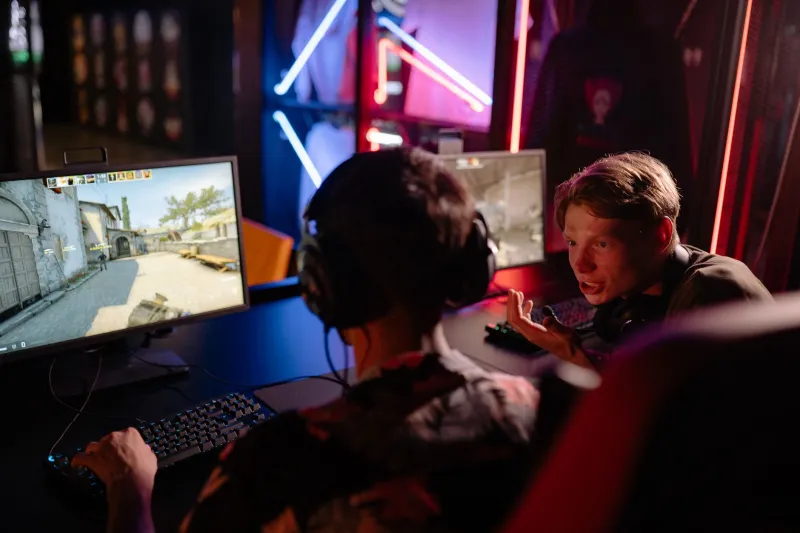
Every guild has a night like this one. A cloak drops. Three people want it. The loot council posts a decision in a channel with 90 members and 12 opinions, and within four minutes somebody has typed the word "favoritism" in a way that cannot be walked back. The officers are exhausted. The raid lead is typing and deleting. And then, quietly, a player nobody put in charge starts sending whispers.
That player is the reason your guild is still standing next week.
The Role Nobody Recruited For
Fantasy guilds have always had officers, class leads, raid leads, and the person who maintains the calendar. In 2026 there is a fifth column that exists on almost no roster document: the conflict mediator. They have no permissions, no title, and no loot priority. What they have is a read on the room and a willingness to do the emotional labor that nobody signed up for.
Most of them hate the word "therapist." Ask around and you get better descriptions — "the friend who gets DM'd at 1 a.m.," "the guild mom, except she's a 24-year-old in Nebraska," "the guy who's weirdly good at getting two tanks to stop hating each other." The job description is less glamorous than it sounds. It is part shuttle diplomacy, part HR, part reminding grown adults that a video game dragon did not personally insult their family.
What changed is volume. Cross-server rosters, always-on voice chat, and content cadences that make every tier feel like a hiring sprint have packed more human friction into a single season than guilds used to see in a year. The friction didn't get more dramatic. It just stopped having a place to cool off.
Three People Who Do This For Free
Tamsin, 31, Ohio. She works nights at a hospital and runs a 200-person guild that spans two time zones, which means she is awake for both of the windows when things go wrong. Her method is unromantic: she asks people to name the outcome they want before they name the grievance. "Nine times out of ten they haven't thought past being mad," she says. "Once they say the outcome out loud, the argument collapses into scheduling."
Belkarth, 27, Oregon. A former officer who quit leadership after a burnout spiral he describes as "three months of dreading my own hobby." He now works exclusively on raid burnout, running what he calls exit interviews for players who are fading. Not to guilt them back. To find out what broke. "Half the time it's not the raid," he says. "It's that they got a new job and nobody noticed they stopped logging in."
Priya, 34, Texas. She handles clique warfare, which is the hardest category because nobody will admit it exists. Her rule is that every private complaint gets a public-safe paraphrase. If someone vents to her about a guildmate, she asks permission to raise it as a general concern — never as an accusation. "You can't launder gossip into policy," she says. "You can only convert it into a question the whole room can answer."
None of the three has any formal training. All three said some version of the same thing: they learned because they watched a guild they loved die over something stupid.
Why the Old Playbook Stopped Working
A decade of guild culture taught officers to handle conflict with authority — warnings, demotions, gkicks, a sternly worded post in the announcements channel. That toolkit still exists and it still works, in the same way a fire alarm works. It resolves the immediate situation and shreds the room's trust in the process.
2026 guilds also have a structural problem: the roster is more emotionally intimate than the leadership structure. Your raid team knows each other's work schedules, relationship statuses, and what their dog looks like. That's a lot of closeness for a hierarchy that amounts to one person being allowed to move a calendar invite. When the officer core makes a decision that feels cold, the guild doesn't experience it as policy. It experiences it as a betrayal by people it knows well, which is a much harder wound.
Mediators fill that gap because they carry no authority to defend. They can say "that decision was bad" and mean it, and then still help you live with it.
Scripts Worth Stealing
You don't need a certification to do this. You need a few sentences that lower the temperature without dismissing anyone. These are pulled from actual mediators — use them before the next /guildchat civil war, not after.
- On a loot dispute: "Before we argue about who, can we agree on what the rule is? If the rule is unclear, that's the real problem."
- On a public callout: "I hear you, and this thread isn't the place for it. Give me ten minutes and I'll hear the whole thing privately."
- On a burned-out officer: "You've been carrying the schedule for four months. What would you drop if nobody was allowed to be disappointed?"
- On clique complaints: "I'm not asking you to name anyone. I'm asking what behavior you'd want a new member to never see again."
- On your own limits: "I'm not the right person for this one, and I want to be honest about that instead of half-doing it."
That last one matters more than the rest. Every mediator interviewed for this piece brought up their own ceiling, unprompted. They are not counselors, they are not equipped for genuine mental health crises, and the good ones say so out loud and point people toward real resources. The role works precisely because it's small and honest about being small.
The Quiet Part
There is a downside, and it's the one nobody puts in the recruitment post. Mediation is unpaid, invisible, and emotionally expensive, and the people best at it are the most likely to get quietly consumed by it. Tamsin's guild has a rule she fought for: two mediators minimum, so nobody is the only door people knock on. Belkarth's rule is blunter. "If you're the only person handling conflict in your guild, that's a leadership gap, not a personality trait."
The fantasy guild was always sold to us as a place to escape the ordinary world. What the unarmed diplomats figured out is that you can't escape people. You can only get better at being one of them — and at making room for the ones who are willing to sit in the awkward middle, holding the door shut so the rest of the room can keep playing.